
Webster Projected Versus Actual Release
A projected date estimates the end of custody under facts known today. An actual release date records what occurred. They are not interchangeable. A Webster County detainee may leave after bond, dismissal, time served, a court order, or transfer. Someone awaiting trial often has no fixed date because the court has not imposed a sentence.
A sentenced GDC inmate follows a different path. The offender detail can show MAX POSSIBLE RELEASE DATE, ACTUAL RELEASE DATE, and CURRENT STATUS. An active record marked currently serving is not a release. An inactive record with an actual date is stronger evidence that state-prison custody ended. The source and status must be read with the date.
Find Webster County Projected Release
Start by identifying who holds the person. The Webster County Sheriff's Office does not publish a local release-date calculator. Some Webster arrests may appear in Sumter County's roster, but that roster is a custody-status clue, not a sentence calculator.
- Confirm the arresting and holding agency.
- For local custody, ask the Sheriff or serving jail for the release record.
- Read the court file for bond, sentence, dismissal, or transfer orders.
- For state prison, search GDC by name, GDC ID, or case number.
- Compare current status, maximum possible date, and actual date.
- Check Parole Board tools only when parole applies.
The Webster County release-record guide explains how court and sheriff records remain useful after someone drops from a live roster. Compare identifiers, conviction county, offense, institution, and incarceration history. A name match alone is not enough.
Georgia Credits Shape Webster Releases
Georgia law does not provide one simple good-time formula for every Webster County case. O.C.G.A. § 42-5-100 addresses the transition from the older earned-time system for crimes committed on or after January 1, 1984. O.C.G.A. § 42-5-101 concerns work incentive credits tied to institutional achievement, education, work, and satisfactory conduct.
GDC's Performance Incentive Credit program can reduce prison length of stay for eligible people. The program awards one month per point, up to 12 months, for qualifying progress in areas such as case plans, education, treatment, and work assignments. Eligibility is not automatic.
The GDC PIC explanation shows the state-prison program.
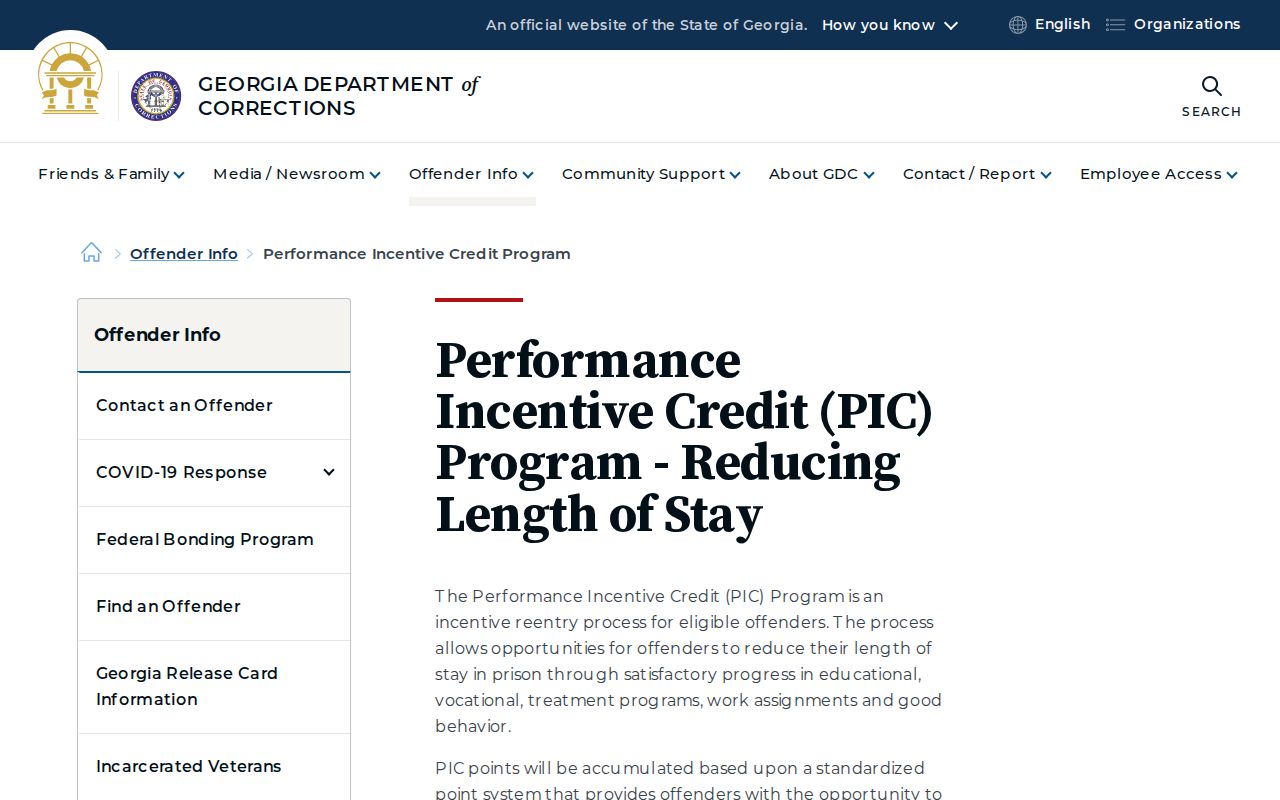
This program applies to eligible state prisoners, not a person bonding out of Webster sheriff custody. No Webster jail good-time or weekend-release formula was found, so none can be inferred.
What Changes Webster Release Dates
Several independent events can move a projected date. The effect depends on sentence type and eligibility, so one person's timeline cannot be applied to another.
| Factor | Possible effect |
|---|---|
| Bond or court order | Can create or cancel a local release path. |
| Credit correction | Changes the calculated remaining term. |
| Program progress or PIC | May reduce time for an eligible GDC inmate. |
| Misconduct | Can postpone or cancel tentative parole timing. |
| Detainer or hold | Can cause transfer instead of community release. |
| Parole decision | May establish, change, deny, or condition timing. |
New court orders, sentence amendments, and statutory restrictions also matter. A release from one facility may begin custody under another authority. Ask whether the date concerns community release, parole, transfer, or the maximum end of a prison term.
Webster Parole Timing Is Tentative
The Georgia State Board of Pardons and Paroles uses Tentative Parole Month, or TPM. A TPM is the month when the Board expects to complete final review and may set a parole release date. It is not a final grant. Good conduct, treatment, or other preconditions can affect it. Misconduct can postpone or cancel it.
General eligibility under O.C.G.A. § 42-9-45 is not a promise of release. Serious violent felony provisions in § 17-10-6.1 and repeat-offender rules in § 17-10-7 can change parole availability. Life sentences follow offense-date-specific rules. The Board can establish a TPM, deny parole, reconsider a decision, or require a condition. After release, DCS may supervise the person. Supervision status is separate from prison custody status.
Webster Jail and Prison Dates
Local jail timing turns on the court and custody event. The Webster Sheriff's FAQ says bond may be issued immediately after booking or within 72 hours depending on charges. That is bond processing guidance, not a guaranteed release window. Posting bond, another hold, or a new order can alter what happens next.
For a short local sentence, the jail and court hold the useful calculation. Request the release date, release type, sentence-credit information, and destination if transferred. For a GDC sentence, use the statewide offender record and GDC records office. The county jail cannot authoritatively calculate a state-prison maximum date.
Webster Release Date Field Differences
Georgia's date labels answer different questions. GDC's maximum possible release date concerns sentence and custody calculation. The Parole Board's TPM concerns a possible parole-review month. An actual release date records a past event. Confusing them can make a tentative milestone look final.
To reconcile the fields, note the source. Check whether status is active or inactive. Ask whether parole eligibility applies and whether a condition remains. Then confirm an actual release with GDC or the receiving supervision agency. This Webster-specific distinction matters because no local jail date tool exists online.
A federal projected date belongs to BOP records, and an ICE locator result addresses immigration detention. Neither can be replaced by GDC. Leaving Webster jail for GDC is a transfer, not final release. Accurate research follows the person into the next custody lane.
Confirm Webster County Release Dates
For a pending release alert, use the Webster County VINELink inmate search after identifying the correct person. VINE may notify after a custody change, but it is not a sentence calculator or certified record.
Confirm a local event with the Sheriff's Office, serving jail, and court. Confirm a state-prison event with GDC. An actual date paired with inactive status is stronger than an estimate. If a hold exists, ask whether release means transfer. A final check should name the agency, custody type, date field, status, and destination. That short list prevents most release-date errors.
Keep a dated copy of each result because projected fields can be revised. If sources disagree, give priority to the agency that controls the custody being measured. The Sheriff or serving jail controls its local release record. The court controls its orders. GDC controls its prison calculation, while the Parole Board controls tentative parole information. A supervision office can confirm reporting duties after release, but it does not rewrite the prison record.
Timing matters as well. A VINE alert may follow the agency update, and a web result can lag behind the event. Contact the responsible records office when a same-day answer is important. Ask whether the person remains there, left for the community, or transferred to another named authority. That distinction shows whether the estimate became an actual Webster County release or merely the next custody stage.
Webster Sentence Records Resolve Conflicts
A court sentence states the term imposed, but it may not display every later administrative credit or parole decision. Obtain the signed order when the length of sentence is unclear. Compare it with the GDC incarceration history and current sentence fields. Conviction county, offense, start date, and case number can help separate two similar records.
For a local detainee, a bond order may set conditions without predicting the moment processing ends. A dismissal can end the case while administrative release steps remain. A detainer may cause immediate transfer. These are reasons to request both the court record and custody disposition rather than relying on a single date shown online.
State-prison records also distinguish eligibility from decision. Becoming eligible for parole does not mean the Board grants parole that day. A TPM does not guarantee a date. A maximum possible date does not show an earlier discretionary release. Read each label by its defined purpose, then verify the final event after it occurs.
When a date is absent, do not calculate one from the sentence alone. Jail credit, concurrent or consecutive terms, statutory limits, and later orders can alter the result. Ask GDC or the jail custodian for the current official calculation and cite the date on which it was supplied.